

September 19th to 24th, 2010 - Rio de Janeiro - Brazil
September 19th to 24th, 2010 - Rio de Janeiro - Brazil
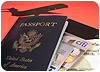
A visa is required for many foreign visitors to Brazil. We recommend you contact your local Brazilian consulate for information concerning visa and any other pertinent requirements for entry to Brazil. Passports valid for at least six months from intended date of arrival are required for Brazil.

Foreign tourists traveling to Brazil may bring US$ 500.00 of duty free items into the country. Besides that, most Brazilian international airports, including Rio de Janeiro, São Paulo and Manaus, offer arriving passengers the added advantage of buying another US$ 500.00 worth of imported articles in the duty free shop located inside the customs area.

Because of the high chemical content used in purifying Rio's system, it is suggested that foreigners drink bottled (mineral) water. Several brands (of both, carbonated and non-carbonated) are available.

All parts of the world can be swiftly contacted by telephone, e-mail or fax. A modern communications system connects the main cities of Brazil, nearly all of which are equipped with DDS (direct dial system) as well as international direct dialing. Most 5-star hotels have 2-line phones in all rooms with data port.

Service tips range from 10% to 15% and in restaurants are often included in the bill as "serviço". The Portuguese word for tip is "gorjeta".

Normal office and working hours are 9am to 6pm daily, with some half days for street stores on Saturdays. Shopping centers are open from 10am to 10pm, Monday through Saturday, and from 3pm to 10pm on Sundays and holidays. Banks are open from 10am to 4pm, Monday to Friday.
As the newly arrived will quickly learn, traffic is fast and bold and not always as gracious as one might wish. Caution is required when crossing the streets, as pedestrians are not always given the right of way.

The electric current in Rio is 110 volts, 60 cycles AC, with the exception of the Inter-Continental Rio and the Sofitel Rio hotels, where the electric current is 220 volts, 60 cycles AC. Although the plug holes may look different, no plug adapter is normally required. In other Brazilian cities, voltage may also vary depending on the hotel. Those which only offer 220 volts 60 cycles AC, have electricity converters available at no charge.

Brazil is an informal and casual country. Jackets and ties are not required anywhere, anytime. Sport clothes are the norm. During our winter – June, July and August, a light jacket or sweater may be advisable in the evenings, but only due to the weather.

SARAH TUR TURISMO & EVENTOS - Rua General Roca, 935/sala 204 - Tijuca – Rio de Janeiro - Brasil - CEP 20521-070
Tel: (55 21) 3203-4822 or 3278-0164 - Fax: (55 21) 3203-4823 - eventos@sarahtur.com.br
